Polyurethane foam, or PUR, is a lightweight and strong material invented in Germany in 1937. It consists of tiny closed cells: solid material makes up 3% of its volume, while 97% is pores filled with gas. As a result, polyurethane foam retains temperature perfectly, since the thermal conductivity of gases is tens and hundreds of times lower than that of solid materials.
The thermal conductivity of polyurethane foam is 2 times better than that of mineral wool and is only 0.022 W/mK. The high water- and thermal-insulation properties of PUR allow it to be actively used for building and insulating industrial and residential buildings: of the many thermal insulation materials, polyurethane foam keeps heat or cold best, and at the same time it has combustibility group G2 – it self-extinguishes in the absence of fire.
Polyurethane foam can be rigid or flexible: flexible PUR is used to make widely used foam rubber, which is used in mattress production but not in construction.
Below we will talk about rigid polyurethane – what it is, what kinds there are, how it is used and why it has won the trust of builders.
How does PUR differ from PIR?
Polyurethane foam (PUR) and polyisocyanurate foam (PIR) are related polymers of rigid polyurethane foams, created as a result of the reaction of several components.
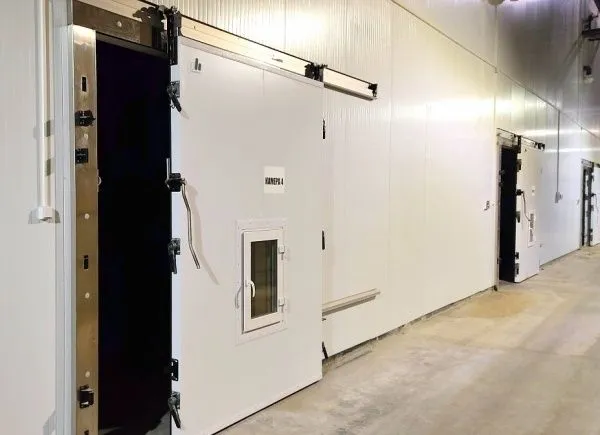
Sandwich panels with PUR Classic insulation are used mainly for building cold and freezer rooms. Sometimes warehouses in earthquake-prone places are built from PUR sandwich panels reinforced with eccentric locks.
PIR is used much more widely. From sandwich panels with PIR insulation you can build:
- cold and freezer rooms
- vegetable and fruit storage facilities, including controlled atmosphere rooms – RGS
- any facilities of the agro-industrial complex: cowsheds, pig farms, poultry houses, etc.
- logistics complexes, cold storage warehouses
- production and administrative buildings, workshops
- service stations, hangars
Sandwich panels with PIR Premier are also used to modernize and improve the energy efficiency of buildings made of other materials.
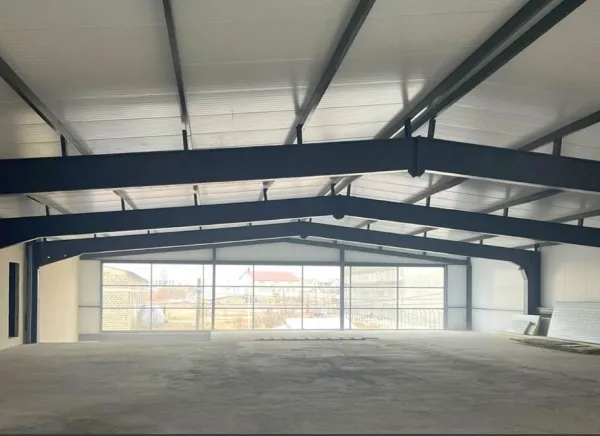
See how a large warehouse was clad with sandwich panels with PIR Premier 80 mm thick
Why does PIR resist fire better than PUR? PIR differs from ordinary polyurethane foam in the ratio of the main components of the mixture: polyol and isocyanate. For PIR the ratio is approximately 1:1.5, while for ordinary polyurethane it is 1:1.1. Sandwich panels with PIR contain more isocyanate than panels with PUR, which provides increased fire resistance. When exposed to fire, PIR chars, and a carbon matrix forms on top of the insulation, which prevents the spread of fire and excludes self-sustained burning. As a result, sandwich panels with PIR insulation belong to combustibility group G1.
According to the Federal Law of the Russian Federation FZ-123 “Technical Regulations on Fire Safety Requirements”, sandwich panels with fire resistance class EI 30 and combustibility class G1 can be used in Russia for building and insulating industrial and residential buildings.
Fire resistance of ProfHolod wall and roof panels PUR, PIR
| Indicator name | Filler | 40 | 60 | 80-120 | 150-200 | Standard |
| Fire resistance limit of wall panels | PUR | EI15 | GOST 30247.1-94 | |||
| PIR | EI15 | EI30 | EI45 | GOST 30247.0-94 | ||
| Fire resistance limit of roof panels | PIR | RE15 | RE30 | RE30 |
GOST 30247.0-94 GOST 30247.1-94 |
|
| Fire hazard class | PIR | K1 (15) | GOST 30403-96 | |||
| Combustibility group | PIR | G2 | GOST 30244-94 | |||
| Flammability group | PIR | V1 | GOST 30402-96 | |||
| Smoke-generating ability | PIR | D3 | GOST 12.1.044-89 | |||
| Toxicity group of combustion products | PIR | T2 | GOST 12.1.044-89 | |||
| Flame spread group over the surface | PIR | RP1 |
GOST R 51032-97 |
|||
Characteristics of polyurethane foam
Among the main characteristics of polyurethane foam are the following: the material
- is easy to operate
- has low vapor permeability
- is resistant to mold
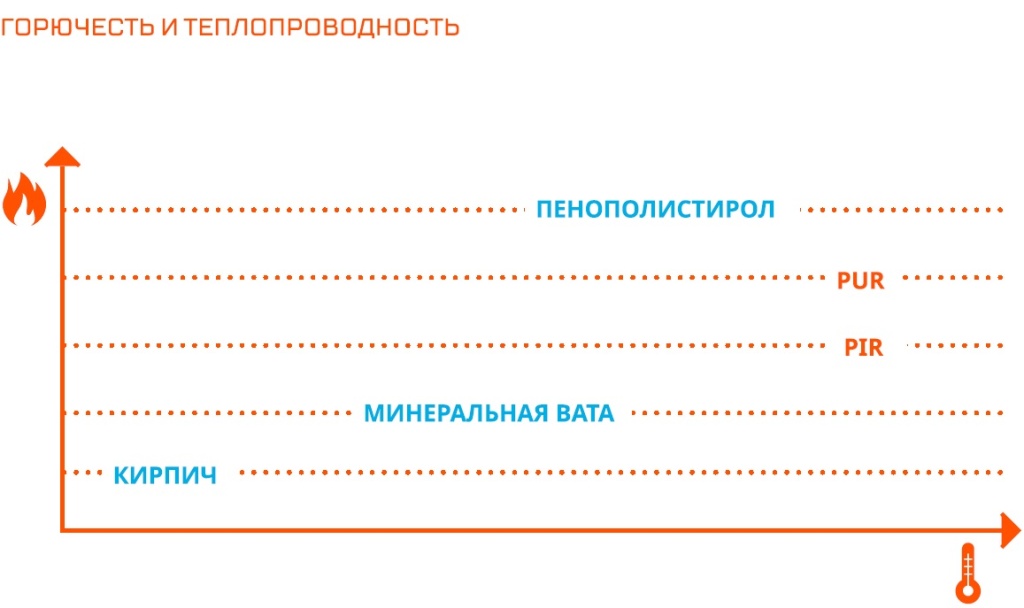
- belongs to the category of hardly combustible materials: combustibility class G2
- adheres excellently to surfaces: it has good adhesion
- is resistant to the destructive action of chemical compounds, including aggressive acidic and alkaline materials
- is environmentally friendly. By decision of the RSFSR Ministry of Health No. 07/6-561 of 26.12.86, the use of this building material in residential buildings is permitted, and it complies with hygienic standards for use in building food refrigeration buildings
- is resistant to the aggressive action of acidic and alkaline materials, moisture, fungi and mold, rodents and insects
In terms of thermal insulation properties, polyurethane foam exceeds standard building materials such as brick or concrete by 15 times.
A sandwich panel with PIR PUR or PUR insulation 100 mm thick retains heat or cold the same as a one-and-a-half-meter wall of ordinary brick.
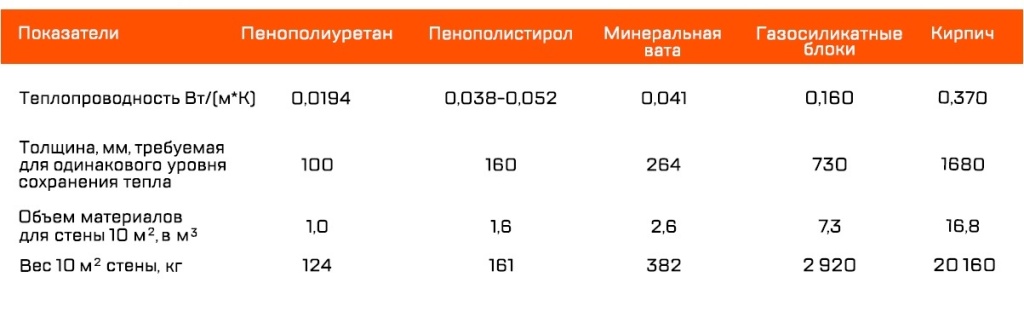
* With a metal facing thickness of sandwich panels of 0.5 mm, PUR density of 40 kg/m3, mineral wool density of 115 kg/m3, expanded polystyrene density of up to 50 kg/m3.
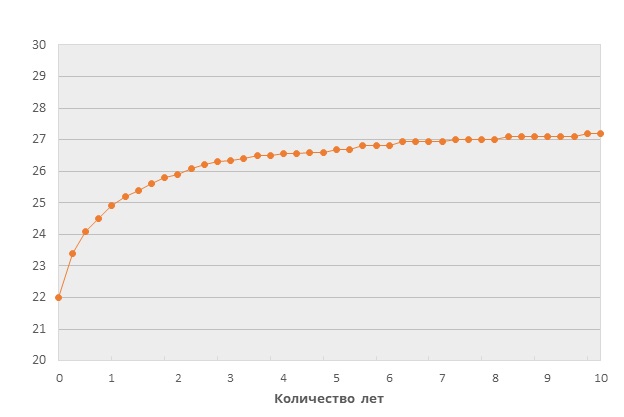
Rigid PUR is very durable and keeps its thermal conductivity for more than 50 years. The graph below shows a study of a 50 mm thick PIR sample without facing. Over 10 years its thermal conductivity decreased by only 0.007 W/mK.
What is PIR Premier?
PIR Premier is a proprietary insulation created at ProfHolod in 2016. Most Russian and foreign manufacturers of sandwich panels with polyurethane foam and PIR Plita use universal ready-made solutions from a limited circle of raw material system producers. PIR Premier was created at the ProfHolod Research Center in partnership with the international concerns Dow, BASF and Evonik.
PIR Premier has guaranteed the quality of sandwich panels and PIR Plita for 6 years®: thermal conductivity and physical and mechanical characteristics, because it was created for use specifically on the production lines installed at ProfHolod.
The system is certified to the European standard EN 14509. All sandwich panels with PIR Premier have carried the CE mark since 2017. PIR Premier became the best-selling PIR system in Russia. By April 2022 ProfHolod had produced, for construction companies in Russia and 27 countries of the world, more than 14,000,000 m2 of sandwich panels with PIR Premier and more than 16,000 tons of polyol systems. ProfHolod customers, more than 2,000 legal entities a year, can confirm the consistent quality of the proprietary insulation.
How are the characteristics of polyurethane foam checked?
Polyurethane foam must undergo incoming inspection, and all products with it must undergo outgoing inspection, at least for compression and tear.
At ProfHolod all components of PIR Premier insulation undergo incoming inspection at the company’s own Research Center.
The selection criteria are density, viscosity and other chemical indicators — 36 parameters in total. This makes it possible to achieve high physical and mechanical properties of the foam, improved flowability and a low thermal conductivity coefficient. Tests are carried out
for water absorption, dimensional stability and mass loss in accordance with the GOST for cellular plastics.
To improve the quality of control of one of the main components of the system, polyester,
ProfHolod specialists held negotiations with 10 reagent suppliers from all over the world and signed a contract with companies whose products are used by the world’s largest concerns: BASF, Dow, Huntsman, Coim, Evonik, Covestro.
To control the properties of PIR Premier at the molecular level, in early 2020 ProfHolod installed at its production site the most advanced complex polyester production unit in the world from the German company H&S.
ProfHolod sandwich panels with PIR Premier insulation demonstrate resistance of over 203 kPa in compression strength tests at 10% deformation and over 160 kPa in tensile tests at a density of 40 kg/m3.
In accordance with the European standard EN 14509, the ProfHolod Research Center carries out destructive testing:
- tensile
- compression
- core shear
- foam span bending
and non-destructive testing:
- artificial aging
- thermal conductivity measurement
Every week the ProfHolod Research Center destroys, cuts, tears, presses, bends, burns, heats to 100 degrees and more, soaks in water and freezes in a special chamber up to 50 linear meters of product samples coming off the company’s production lines.
How is PUR used in construction?
Polyurethane foam as part of sandwich panels is used for
- building prefabricated industrial buildings, cottages, warehouse premises, cold and freezer rooms for restaurants, supermarkets, hotels, etc.
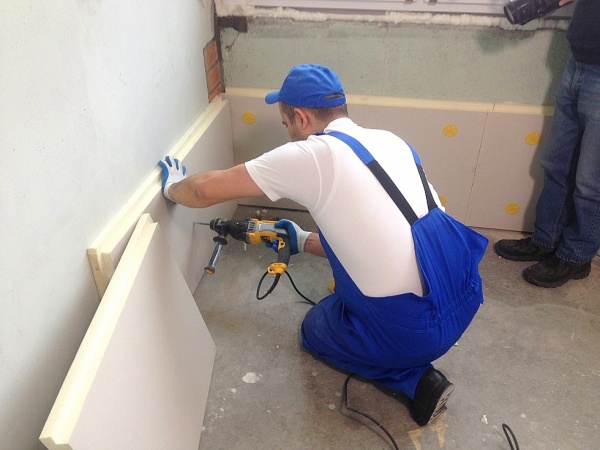
- insulating any buildings and structures, cottages, balconies in apartment buildings as part of PIR Plita® — for insulation only.
With PIR Plita® a flat roof is also built, on which it is convenient to place refrigeration units if the building is industrial, and to arrange various recreation areas if the building is an office or residential one. In modern suburban house building, the roof is often connected to the living space, and flower beds, solariums, cinemas, sports grounds and even swimming pools are arranged on it.
PIR Plita® is excellent for arranging a flat roof thanks to its rigidity, high energy efficiency, moisture resistance, low weight, ease of installation and fire safety.
PIR Plita® is included as insulation in the roofing pie of a flat roof, which can consist of
- a membrane
- PIR Plita insulation®
- mineral wool boards to reduce combustibility
- vapor barrier film
- profiled sheet
Reinforced usable roofs can consist of
- a concrete base
- a concrete screed
- waterproofing
- drainage
- PIR Plita insulation®
- geotextile
- a sand-cement mixture
- paving tiles
Comparison with mineral wool
Historically mineral wool has been popular in Russia – mostly because of its fire resistance. Mineral wool belongs to the group of non-combustible materials, NG – and that is where the advantages of mineral wool end.
1. Compared with polyurethane foam, mineral wool keeps heat or cold worse, with a thermal conductivity of 0.041 W/mK, whereas for PUR this figure is 0.022 W/mK.
What does it mean? You will need a layer of mineral wool twice as thick for insulation compared with PUR.
2. Mineral wool is heavy, its density is from 80 kg/m3, whereas PUR has an average density of 40 kg/m3.
What does it mean? You will need to build a more expensive foundation and/or use stronger metal structures.
3. Mineral wool loses its properties faster, getting wet and settling: its service life is 25 years, whereas for PUR it is from 50 years.
What does it mean? Mineral wool is more expensive to operate and will need replacing sooner than if you had insulated the house with polyurethane foam.
Tips and recommendations
1. Consult the manufacturer when choosing insulation. At ProfHolod you will have a personal manager who will offer exactly what you need.
2. Pay attention to seasonality: in summer, product delivery times increase.
3. Be careful with transportation. It is better to order transportation from the manufacturer, who is interested in all products reaching you in complete safety.
Below are a few recommendations on transportation; you can get more detailed information from the manufacturer.
The total height of sandwich panel packs for transportation must not exceed 2.56 m. It is forbidden to place other loads on the sandwich panel packs. Packed sandwich panels must be rigidly secured in the truck body with textile straps. Packed sandwich panels must not touch the side stakes, the body sides or any objects in the body
PIR Plita® must fit completely in the truck body. The total height of PIR Plita packs® for transportation must not exceed 2.56 m. It is forbidden to place other loads on packs of PIR Plita®. Packed PIR Plita® must not touch the side stakes, the body sides or any objects in the body. PIR Plita® packs must be lifted only one at a time.
4. Prepare a storage area.
Packs of sandwich panels should be stored on the construction site on a level surface prepared in advance. It is forbidden to push or drag the packs: this can damage their surface. The packs are stacked in one or two tiers, the total height of which must not exceed 2.4 m. During intermediate storage in open areas, sandwich panels must be protected from direct sunlight, dust and precipitation. When storing, packs of panels must be placed at a slight angle to allow precipitation to run off.
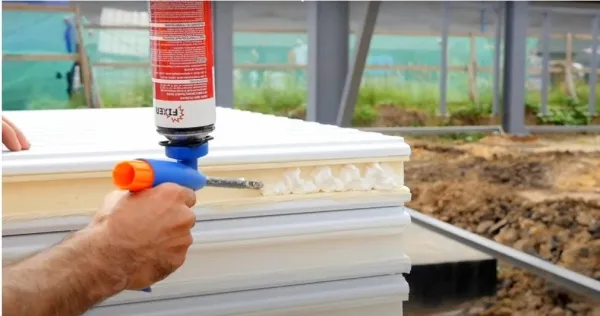
5. Pay special attention to sealing the joints of sandwich panels. See the short instructions.
6. Visit trade exhibitions where you can talk directly with manufacturers. Such exhibitions include Agroprodmash, YugAgro and KazBuild.